|
Aladdin Model 6 Lamp Sold
from September 1914 through July 1917, In Canada through August
1920

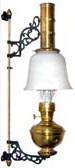
Table lamp #101
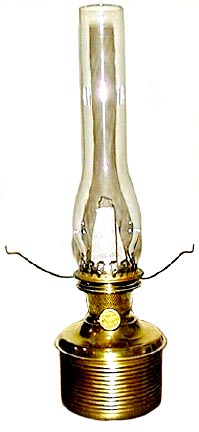 Oil pot #106
 |
|
The Aladdin model 6 lamp may well
be the most famous model of them all and is the only model
to have dated wick adjuster knobs.
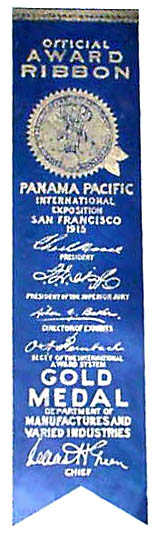
In 1915 the Aladdin model 6 lamp won a gold medal and a blue
ribbon at the Panama-Pacific
International Exposition in San Francisco. I suspect the
date was added to let customers know that this was the model
that was judged to be the best in the world.
The first model six lamps had insulated burners with no dates.
After the prize was won, the date was hurried into production
by stamping the date on the wick adjuster knob. Later the
wick adjuster stamp mold was modified to include the date.
Then starting 1917 through 1920 undated uninsulated model
6 burners were built for the Canadian market.
Aladdin applied for a patent on this burner on 28 Aug 1914. The patent was filed on 19 Feb, 1918
after sales of the model 6 had ceased (patent 1256879 ).
Because model 7 and later burners were not backwards compatible
to model 6 and earlier, the model 6 burner stayed in production
through the 1930 lamp selling season as a replacement for
model 3 through 6 lamps. Model 6 wicks and flame
spreaders were kept in production through 1954 as replacement
parts for the model 3 through 6 lamps.
To date I have found five different versions
of the model 6 burner:
vers 1 |
2 |
3 |
4 |
5 |
no date |
stamped date |
molded date |
molded date |
no date |
insulated |
insulated |
insulated |
uninsulated |
uninsulated |
Earliest |
|
|
|
Newest |
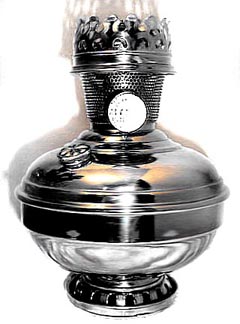 1914 Fount lamp #102
 |
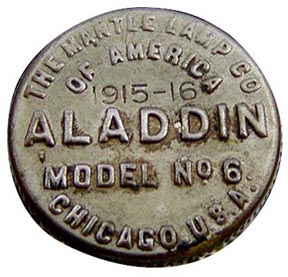
Stamped date 1915 |
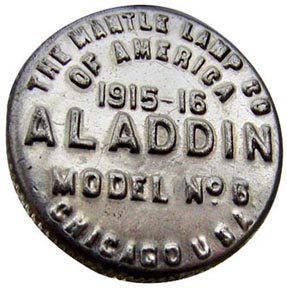
Embossed date, 1915 & 1916 |
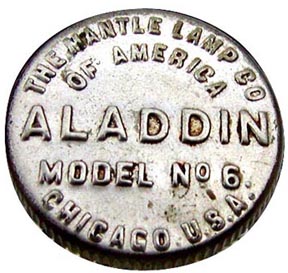
Undated knob, 1914 & 1917 & later |
|
The insulated wick tube started with the new style model 5 burners
and was discontinued sometime during the model 6 burner production
while the wick adjuster knobs were still dated. The Aladdin model
6 lamp was replaced by the model 7 for the 1917 lamp selling season
in the United States but was sold in Canada instead of the models
7 and 8.
Variations:
Table - Finish: Clear lacquer over satin brass,
or Nickel plated
Fount - (Wall mount & hanging,) - Clear lacquer
over satin brass or Nickel plated
Oil pot - Finish: Clear lacquer over satin brass
Floor lamp - Finish: oxidized bronze
Transition (very early lamps) - As near as I can tell
model 6 lamps using undated #6 insulated burners and late
model 5 lamp are identical except for the model number.
Accessories:
Bug screen: Early style bug screen in 1917. Could
be found on lamps with uninsulated undated model 6 burners
Originally sold into Canada during 1917 & later.
wick cleaner: 3 prong style.
Shade ring: Attached to the base of the gallery and
had a scallop design along the inside ring. The arms are
round in cross section and support a 10 inch glass shade.
This is the same style used for model 3, 4 & 5 lamps.
Shades: table - A 201 shade made from a new mold was
offered for the model 6 during the 1914 season then replaced
by the 301 "Chippendale" shade for the 1915 and later lamp
selling seasons. Hanging - 215 and a very small number with
325 hanging globe. Floor lamp - Old rose silk with tassel
fringe along bottom.
Chimney: Heelless globe type (rounded bulge
near base), crest logo.
Match Holder: Model 6 lamps came with a
copper plated steel match holder that had pockets for the
instruction booklet, warranty card, a spare generator and
the wick cleaner. Match holders sold during the 1914
model year may not have had the Aladdin name on the holder.
A spare mantle and generator was also provided with each
lamp.
|
 |
|
Documents:
|
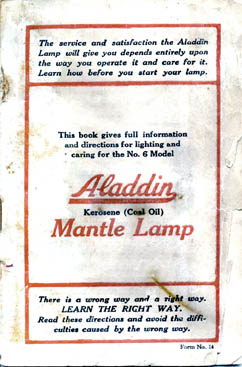
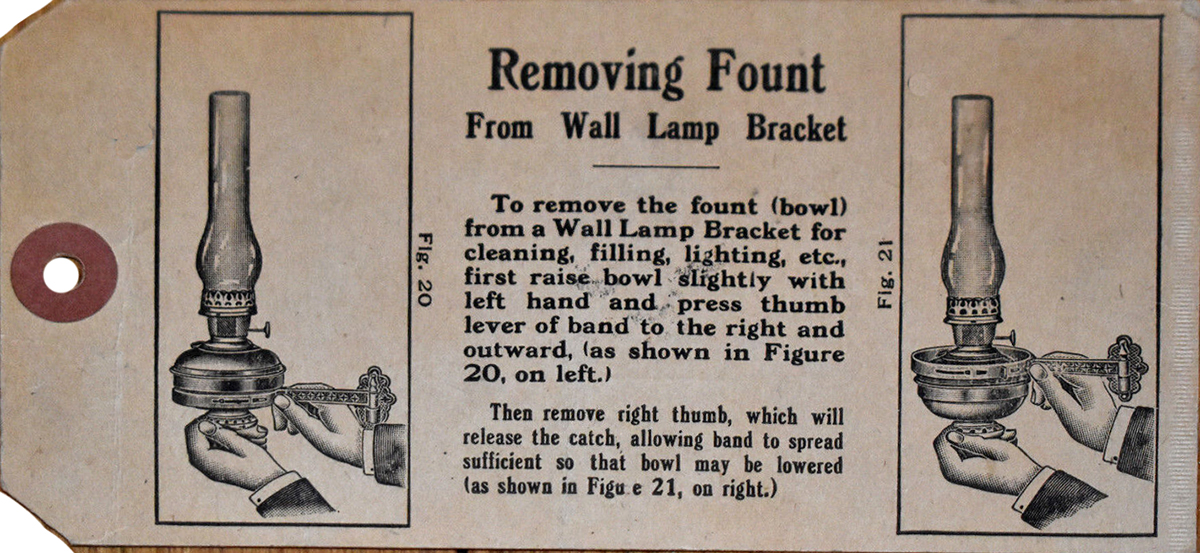
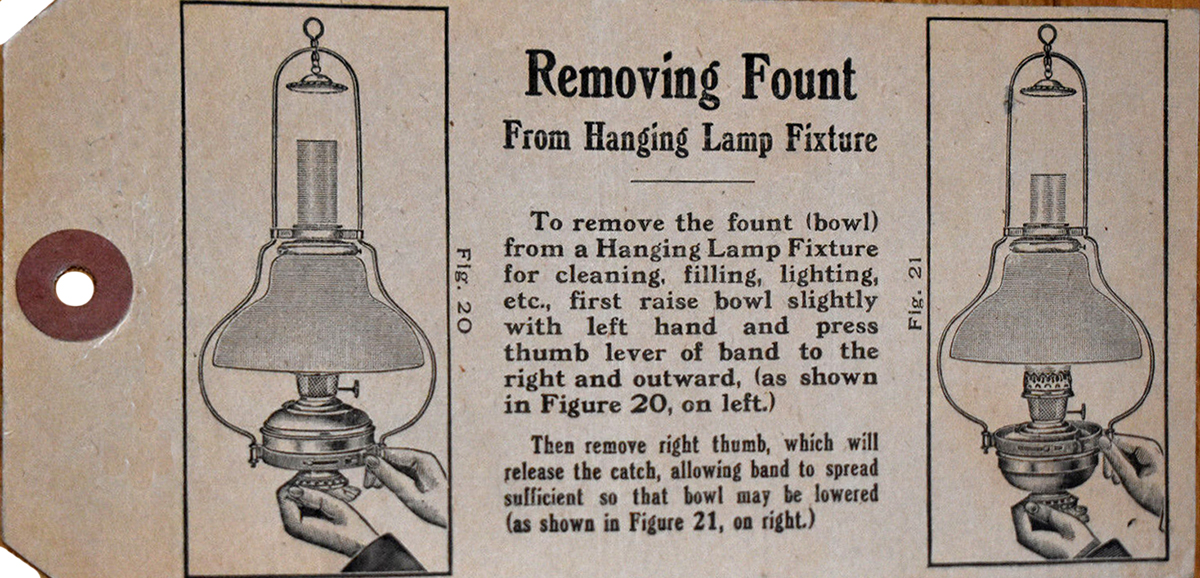
Common model 6 instruction manual |
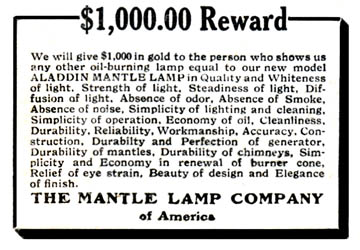
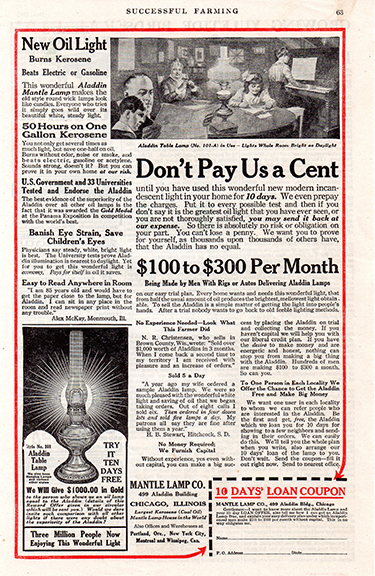
Reward advert off an envelope cover
After Aladdin won the world fair gold medal in 1915 they launched
this major marketing campaign for the model 6 lamps |
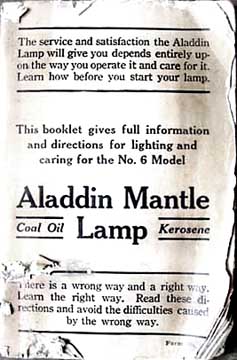
1914 only (?) version of the model 6 manual |
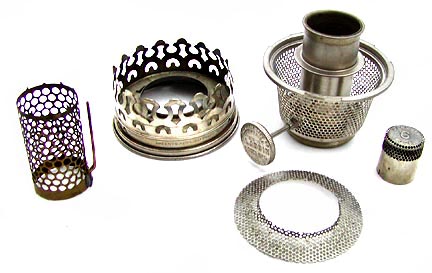
This is a disassembled model 6 uninsulated burner
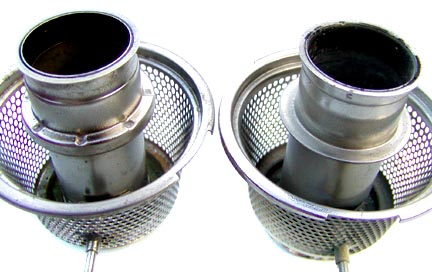 |
Insulated burner base on the
left and uninsulated burner base on the right. The quickest
way to tell on an assembled burner is to remove the gallery
and look for radial creases on the outer wick tube ridge.
The insulated outer wick tube started with the late version
model 5 burner and was carried into the early model 6 burner.
My guess is that Aladdin went to the uninsulated burner around
the end or 1915 or early 1916. |
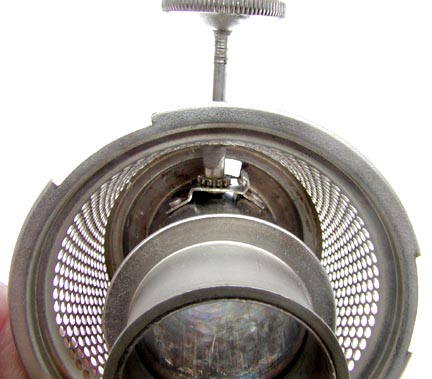 |
This picture shows the gearing
used in the model 6 burner. The 'C' shaped brace can be carefully
bent towards the gear if the gearing slips when trying to
adjust the wick. This is a late uninsulated burner. |
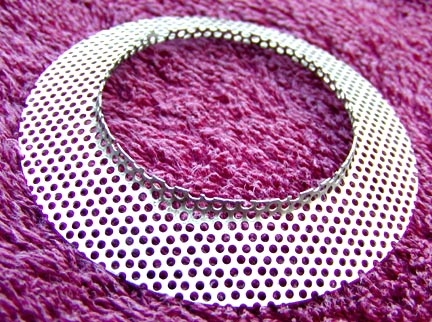 |
The air distributor used throughout
the late model 5 and model 6 burner production fit both insulated
and uninsulated burners. |
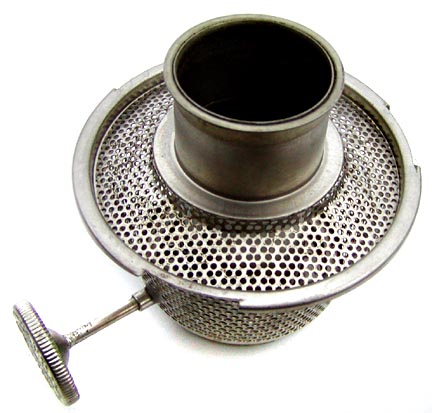 |
The air distributor fits the
side of the crease in the outer wick tube. The upward fold
in the outer wick tube provides a tight friction fit for the
air distributor against this uninsulated burner. |
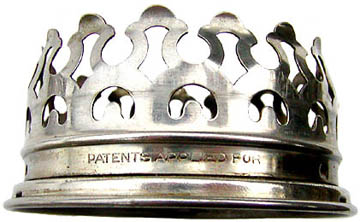 |
The gallery used throughout
model 6 production was carried over from the model 5
The writing on the side says "PATENTS APPLIED FOR"
|
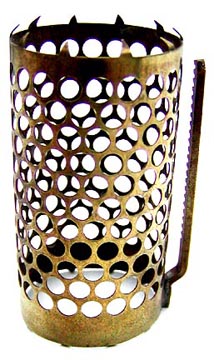 |
The model
6 wick raiser. It was normally sold premounted on an unreinforced
wick. The model 6 wick was sold as a replacement
wick for models 3 through 6. The model 6 wick was in production
through 1954 when the tooling was destroyed in a flood. |
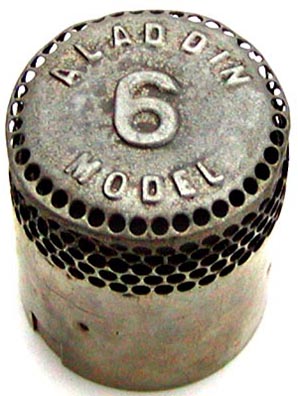 |
The model 6 generator was
the recommended replacement for model 5 & 6 lamps. After
the model 4 generator was discontinued the #6 generator
became the recommended replacement for model
4 lamps as well. The Aladdin model 6 generator stayed in production
through 1954. |
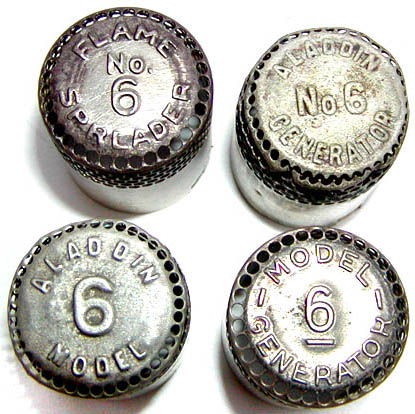 |
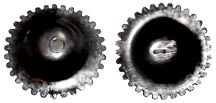
There are
at least four different stampings used on model 6 generators.
If you are into counting the tiny holes, there may be more
versions based upon hole diameter, location and quantity.
Unfortunately these generators are not pictures in order
of age. The right is the earliest generator and was
replaced sometime during production by the bottom left
generator.
The bottom right generator probably went into production
for the replacement part market around 1920 when the model
6 was discontinued and the model 9 was introduced. The line
under the 6 on this generator and under the 9 on the model
9 generator helped people tell them apart. The flame spreader
in the upper left corner would be the newest and made specifically
for the replacement part market. Before 1928 flame spreaders
were officially named generators. In 1928 the name was changed
to flame spreader to avoid confusion with a gas light generator.
So the upper left flame spreader probably went into production
on or slightly after 1928 and was the last replacement available
for the model 3 through 6 lamps.
|
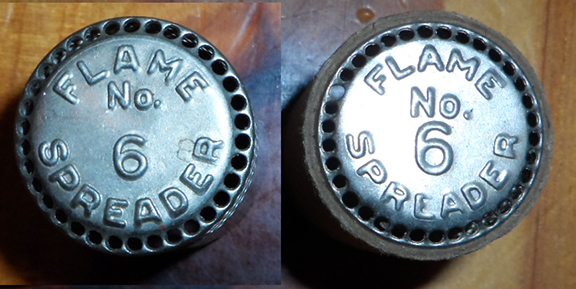
There were at least two sets of dies used to stamp model 6 flame spreaders between 1928 and 1953. The one with the larger '6' is
considered to be the newer of these 2 versions.
Photo courtesy of Steve Fowler
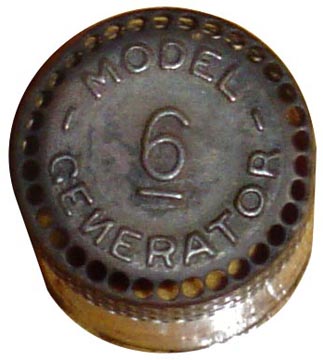 |
And sometimes Oops happens. On this flame spreader the 'N' is backwards on the word GENERATOR |
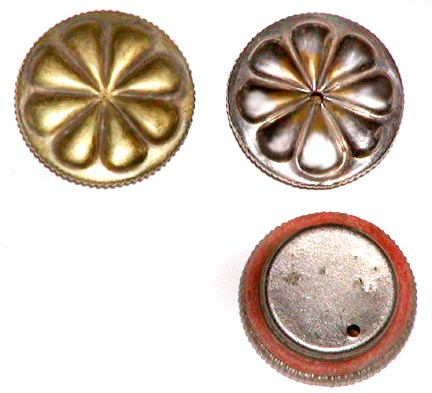
Late model 5 and model 6 cap on left. Model 1-early 5 cap on right
|
Aladdin model 1 through 6 used a filler cap with a flower
pattern on top. There were two varieties, vented, with a
hole in the centre top and unvented.
Models 1 through early 5 lamps with slotted burners used
the vented cap. Late model 5 and model 6 lamps
used the non vented type. |
The lamp tank needs to be ventilated so that kerosene can be drawn up the wick. If it is unvented, the tank would start to draw a vacuum as kerosene is drawn up and the fluid level dropped causing less and less kerosene to be drawn up the wick. In model 1 through early 5 the vent was in the cap as shown above. For the late model 5 and model 6, three small holes were drilled in the centre draft tube above the fluid level. This allowed Aladdin to use an unvented cap.
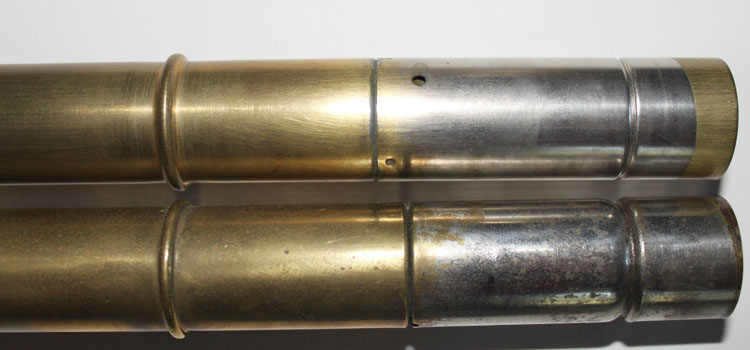
Model 6 draft tube on top and model 4 draft tube below. You can see one of the three vent holes drilled into the draft tube.
|
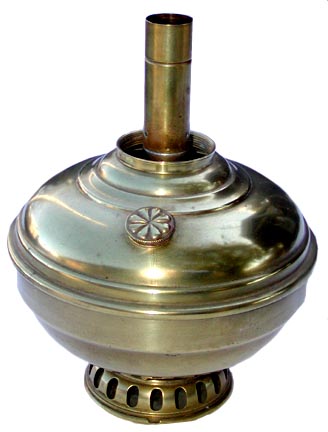
This is an
early model 6 fount lamp. The fount is identical to the
late model 5 one quart fount. This version appears to have
only been offered in 1914 and would be the correct
fount to use with a #115 hanger and undated insulated model
6 burner. |
 |
This is a
late model 6 hanging fount introduced in 1915.
The sole differences between the late model 5 & 1914
model 6 founts and the 1915 & newer fount is the bottom
plate and the tabs at the base of the skirt for mounting
the bottom plate.
I do not know if this font was introduced in time for
the insulated undated and date stamped burners but it
would be correct for insulated molded date and the
uninsulated versions of the model 6 burner. |
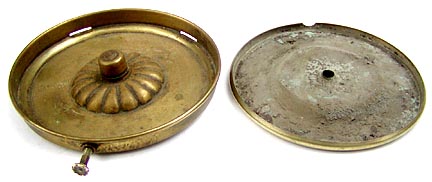
|
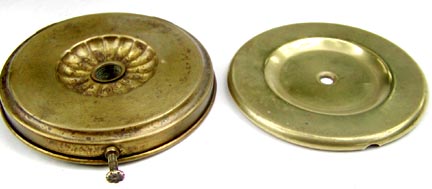
Early and
late model 6 fount bottom plates. The plate on the left
is the early model 6 bottom plate which is identical to
the bottom plate found on model 3, 4 and 5 fount lamps.
It is held in place with two tabs on the fount's foot and
a finger set screw. The set screw has an open flower pattern.
The newer bottom plate appears the same as the bottom
plate used on models 7 through 11 founts but with its slightly
smaller 3-1/4 inch dia. will not fit the later lamps. The
later bottom plates are 3-1/2 inch diameter.
The newer plate has a curled lip that closely fits over
the font base. There is a notch in the lip that fits over
a bump on the lower side of the foot and a twist locks it
into place. |
 |
Here is a side
by side comparison of a 1 quart model 6 fount and
a model 4 1-1/2 quart fount. I could not find any
differences in the bowl top sections. This implies that the
same top bowl half forming tooling was most likely used on
both models |
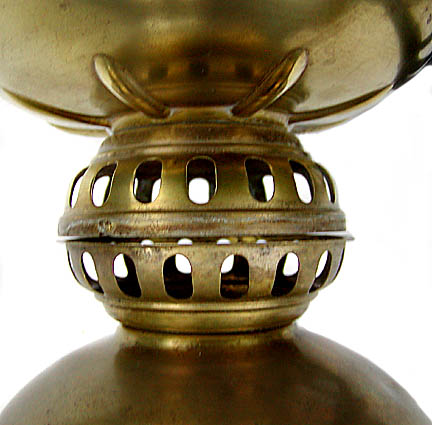 |
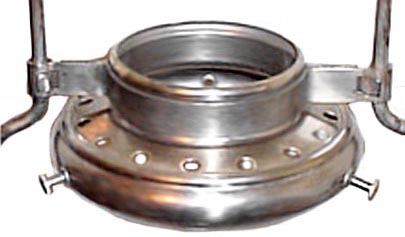
An end to
end comparison Model 6( top) and model 4 (bottom).
The 18 hole base used on early model 6 founts
(top) is identical to the model 4 fount (bottom). This again indicates that the same bottom skirt tooling was used in model 4, 5 and early six font lamps.
The
only difference between the early and late model 6
fount base is the presence or absence of base plate
mounting tabs. |
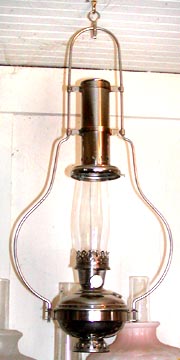
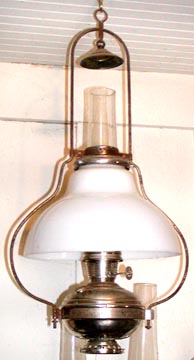
115 hanging model 6 on left without shade. Style 116 model
6 hanging lamp on right with 215 shade. Notice difference
in harp shape between the two. The 115 is the earlier version used in 1914 and possibly into 1915. It used the early version of the font and insulated undated burner. The 116 style is the later version. The model 6 harp rod is approx.
1/4 inch dia. The harp rod used in the earlier model 5 version
of these hangers is 3/16 " dia. Note the smoke bell
shown is incorrect for these lamps. Both hangers used the 215 shade.
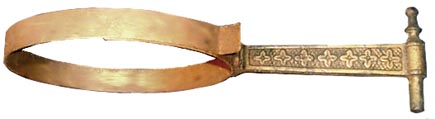
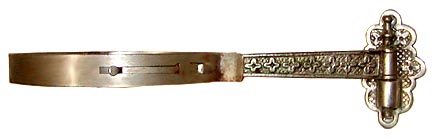
|
TOP BRACKET:
The top wall mount bracket likely was in use in 1914 with the first model 6 lamps and would be correct for the earliest version of the model 6 font lamp.
BOTTOM BRACKET:
The bottom bracket came into production likely starting 1915, but possibly sometime in 1914 when the ring mount of the model 6 hanging lamp was redesigned. The mounting rings on the wall mount brackets and on the hanging lamps have the same pattern and when expandable, the same expansion latch so I am going by the change in the hanging lamp mounting ring to date the changeover between the two wall brackets.
The lower wall mounting bracket is by far the most common being used through most of model 6 production through the end of model 11 production without change.
|
|
The oil pot
used with the model 6 was manufactured using "generic"
off the shelf Plume & Atwood tooling that had been
in use since the late 1800's.
Oil pots were much used by the kerosene lighting industry
during the late 1800s and very early 1900's as lamp inserts
for glass 'gone with the wind' style lamps and in
an assortment of fancy stamped metal bases commonly used
for hanging, piano and banquet style lamps. The
early Aladdin oil pot lamp is standard industry size of 5 inches in diameter and
was offered for sale to people who wanted to upgrade their
oil pot lamp with an Aladdin.
The model 6 oil pot was the first to be used in a complete
Aladdin lamp. It was used in the model 6 floor lamp, which
was Aladdin's first floor lamp.
Aladdin's next oil pot lamp would be a model 12 which was
built primarily to go into Aladdin vase lamps. |
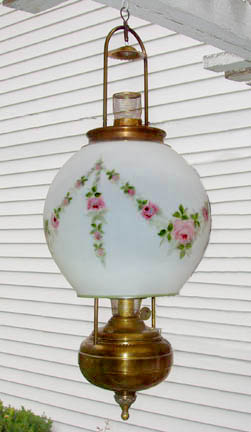 |
Model 6 fancy hanging lamp, catalogue number 125-A came
finished in Clear lacquer over Satin brass only. This lamp used a model 6 oil pot.
Globe shade No, 325 was the only ball
shade ever made for an Aladdin lamp. This ball
shade hangs from a top shade collar and not from the
bottom. This
shade does not fit any Aladdin hanger that I know of
except for this limited
edition
hanging lamp. The shade is thin clear crystal
that was acid etched on the outside and hand painted. It
originally cost 18.00 which was over twice that of the
common model 6 hanging lamp.
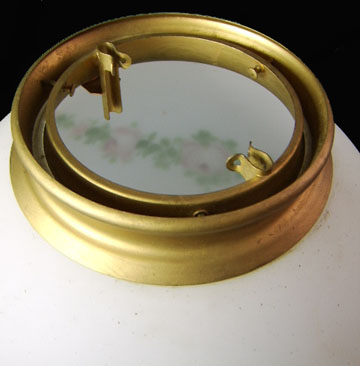
top ring of Aladdin model 6 ball shade
|
Parts support:
Mantles: Production of Aladdin KoneKap mantles ceased in 2007. In 2012 Aladdin introduced an adapter that fits onto a model 3 through 11 gallery that allows the use of a Lox-On mantle with the earlier lamps.
Wick/Carrier: Models 3, 4 and 5 mounted wicks can be used. Model 6 wicks were discontinued in 1955.
Gallery: The model3, 4 and 5 galleries can be used.
Generator: Model 4 and 5 generators can be used.
Burner: Model 3, 4 and 5 burners can be used. The thread diameter was changed starting in model 7.
|

 Contents > Aladdin
model 6 lamp
Contents > Aladdin
model 6 lamp